

Through Baby’s Eyes: AI Takes Peek at the World, Learns to See Like a Child
Imagine learning the world the way a baby does: blurry shapes, swirling colors, and a cacophony of sounds. Now, scientists have harnessed that experience to train an AI, giving it a unique glimpse into human development.
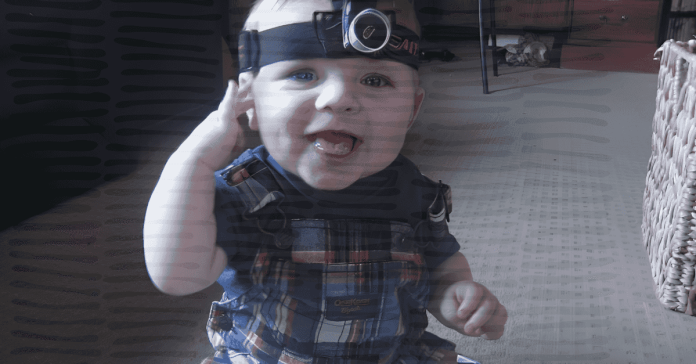
In a groundbreaking experiment, researchers at New York University strapped a camera onto a curious six-month-old named Sam. For 18 months, they captured his daily adventures, amassing 60 hours of footage—a baby’s-eye view of the world. But this wasn’t just home videos; it was a treasure trove of data for a special AI student.
Scientist use 6-month-old baby named Sam to teach AI how humanity develops – amid fears tech could destroy us https://t.co/AZ6ayRMjnX PIC.TWITTER.COM/O9ZQRKTXME
— Daily Mail Online (@MailOnline) FEBRUARY 2, 2024
Meet the Child’s View for Contrastive Learning model, or CVCL for short. Fed Sam’s experiences, CVCL wasn’t given a textbook or a lecture. Instead, it absorbed the world the way Sam did: watching, listening, and making connections between sights and sounds. It learned to recognize objects like a baby, not from perfect labels, but through the messy, sensory chaos of everyday life.
This experiment wasn’t just about cute baby videos. It aimed to crack the code of human language learning. By mimicking a child’s experience, CVCL could reveal the essential ingredients for building language skills. Do babies need special programming, like an innate understanding of grammar? Or can simple observation and association be enough?
CVCL’s performance was impressive, correctly matching words and images 61.6% of the time. Even more remarkable, it could identify new objects, like “apple” and “dog,” based on its “baby-brain” learning. It wasn’t perfect, struggling with words like “hand” due to its ever-changing appearance. But these are baby steps, and the researchers are eager to explore further.
This experiment holds vast potential. It offers a window into how humans and machines learn, paving the way for AI that can interact and understand us better. Imagine educational tools tailored to a child’s natural learning style, or AI assistants that anticipate our needs based on subtle cues. The possibilities are as exciting as a baby’s first word.
So, the next time you see a curious child exploring the world, remember, they might be teaching not just themselves, but the AI of tomorrow. And who knows, maybe someday, AI will look back at us with the same wide-eyed wonder, learning the world through our human perspective.
